
Pabington Bear: The Story Behind the Misspelled Name of a Beloved British Character

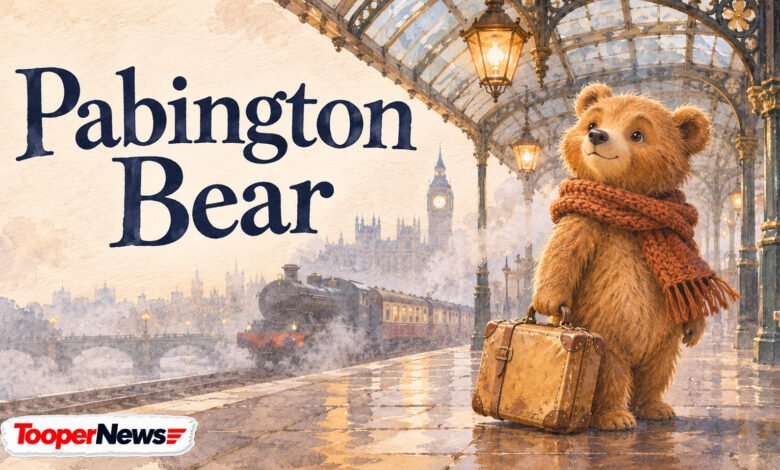
Many people search online for “Pabington Bear” and land on pages about a polite little bear who loves marmalade sandwiches. The name looks familiar, yet something feels slightly off. In reality, Pabington is a common misspelling of Paddington, the famous character created by Michael Bond. The mix-up spreads through typing errors, autocorrect suggestions, and social media posts that treat the variant as intentional. Readers who arrive looking for information about Pabington Bear usually discover the real history of Paddington instead.
This article clears up the confusion while sharing the verified story of the character people actually mean. It draws only on publicly documented facts from reliable sources such as Wikipedia and contemporary reporting. No unverified personal details are added because Paddington is a fictional bear, not a real person. The correct spelling remains Paddington throughout the literary and commercial record.
What “Pabington Bear” Actually Refers To
Searches for Pabington Bear almost always point to Paddington Bear, the anthropomorphic Peruvian spectacled bear who first appeared in print in 1958. Online content sometimes treats “Pabington” as a playful or phonetic alternative, yet dictionaries and encyclopedias do not list it as an official name. The term gained visibility because mobile keyboards and non-native speakers occasionally replace the double “d” with a “b.” Once the misspelling appears in forums or captions, curiosity drives more searches, creating a small but persistent online presence.
The phenomenon illustrates how digital culture can amplify a simple typo. Some blogs frame Pabington as a symbol of curiosity or digital literacy, but the underlying character and stories remain those written by Bond. Readers seeking merchandise, books, or attractions under the misspelled name still find the official Paddington products and experiences.
Origins of the Real Paddington Bear
Michael Bond created the character after spotting a solitary teddy bear on a shelf in a London shop on Christmas Eve 1956. He bought the bear as a present for his wife and later named it Paddington, after Paddington Station near their home. Bond wrote the first stories in about ten days. William Collins & Sons published A Bear Called Paddington on 13 October 1958. The bear arrives at the station from “Darkest Peru” with a label that reads “Please look after this bear. Thank you.” The Brown family takes him in and gives him the English name Paddington.
Bond drew part of the idea from newsreels of child evacuees during the Second World War. Those children also carried luggage labels and small suitcases. The character’s politeness, blue duffel coat, red hat, and habit of keeping a marmalade sandwich under his hat quickly became iconic. Original plans set the bear’s home in Africa, but Bond changed it to Peru after learning there are no bears there; the spectacled bear is native to South America.
Literary Success and the Book Series
Bond wrote 29 books featuring Paddington, the last of which appeared posthumously in 2018. Peggy Fortnum provided the classic early illustrations. The stories are episodic: Paddington tries everyday tasks such as taking a bath or shopping, misunderstands human customs, and usually ends up causing cheerful chaos while remaining thoroughly well-mannered. He gives a famous “hard stare” to rude people. The books have sold more than 30 million copies worldwide and have been translated into roughly 30 to 40 languages.
HarperCollins later licensed the publishing rights. The gentle humor and themes of kindness, belonging, and fairness continue to attract new generations of readers. Many adults who grew up with the stories introduce them to their own children.
Film, Television, and Stage Adaptations
Television versions began in the 1970s. A BBC stop-motion series ran from 1976 to 1980, followed by animated series. The character reached a new audience with the live-action/CGI films Paddington (2014) and Paddington 2 (2017). Both received critical praise and BAFTA nominations for Outstanding British Film. Ben Whishaw provides the voice in the modern films. A third film, Paddington in Peru, was released in 2024. StudioCanal owns the broader franchise rights.
In 2025, a stage musical premiered at the Savoy Theatre in London’s West End. The production uses puppetry and original songs to retell the story of family and belonging. These adaptations keep the core personality intact while introducing the bear to viewers who may never have read the original books.
Cultural Impact and Enduring Symbols
Paddington has become one of Britain’s most recognizable fictional characters. In 1994, a stuffed Paddington was the first object to pass through the Channel Tunnel when the British and French sides met. In 2022, the bear appeared in a pre-recorded segment with Queen Elizabeth II for her Platinum Jubilee. Statues stand at Paddington Station and elsewhere in London. The character’s impeccable manners and occasional mishaps resonate across cultures.
Merchandise ranges from classic plush toys (first produced commercially in 1972) to clothing, books, and limited-edition collaborations. The image of the small bear in the blue duffel coat and red hat remains instantly identifiable decades after the first publication.
Attractions and Experiences in London
Visitors can step into the stories at The Paddington Bear Experience inside County Hall on London’s South Bank. The immersive attraction spans more than 26,000 square feet and guides guests from a recreated Paddington Station through London landmarks to 32 Windsor Gardens. Interactive elements and character encounters form part of the visit. Seasonal overlays, including a Christmas version with a large tree and festive treats, run at various times of the year.
The experience complements the books and films rather than replacing them. It offers families a chance to walk through familiar locations and share the character’s love of marmalade sandwiches in a physical setting.
Why the Character Continues to Matter
Paddington endures because the stories balance humor with genuine warmth. The bear arrives as an outsider, is welcomed by an ordinary family, and repeatedly chooses kindness even when situations go wrong. Those themes of hospitality and quiet resilience remain relevant. The misspelled name “Pabington Bear” online simply funnels more curious readers toward the same verified history.
Bond, who received an OBE and later a CBE for services to literature, died in 2017 knowing the character was in safe hands. New adaptations and attractions continue to introduce the stories to fresh audiences without altering the essential polite, sandwich-loving bear.
Conclusion
Anyone searching for Pabington Bear is almost certainly looking for Paddington Bear. The variant spelling is a modern online phenomenon, while the character himself has a clear, documented history that began with a lonely teddy bear in 1956 and a book published in 1958. The books, films, musical, and London attraction keep the story alive for new generations. The correct name is Paddington, yet people feel affection for the character under either spelling.
FAQs
Is Pabington Bear a real character?
No. Pabington is a common misspelling of Paddington Bear, the fictional character created by Michael Bond. All official books, films, and merchandise use the spelling Paddington.
Who created Paddington Bear and when?
Michael Bond created the character. The first book, A Bear Called Paddington, was published on 13 October 1958. Bond based the idea on a teddy bear he bought in 1956 and on memories of wartime child evacuees.
How many Paddington books are there?
Bond wrote 29 books in the series. The last, Paddington at St Paul’s, was published posthumously in 2018. More than 30 million copies have been sold worldwide.
Where can visitors experience Paddington in London today?
The Paddington Bear Experience at County Hall on the South Bank offers an immersive walk-through attraction based on the stories. Seasonal versions, including Christmas, are sometimes available.
Why do people search for “Pabington Bear”?
Typing errors, autocorrect, and phonetic spelling cause the misspelling. Once the term spreads online, curiosity drives further searches that lead back to the real Paddington character and stories.