

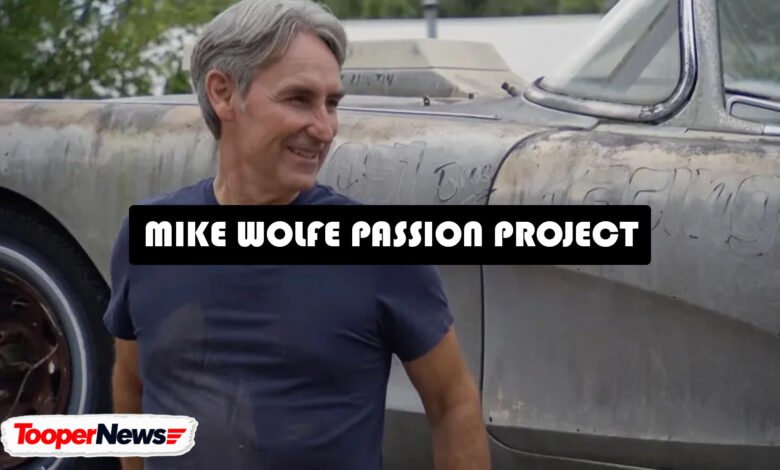
Most people recognize Mike Wolfe as the familiar face of American Pickers. He’s spent years traveling across the country, searching dusty barns, abandoned garages, and forgotten collections for valuable antiques. But there’s another side to his work that has attracted growing attention. The Mike Wolfe passion project focuses on restoring historic buildings, protecting American heritage, and bringing new life to communities that deserve a second chance.
Instead of simply collecting vintage motorcycles and rare memorabilia, Wolfe is now preserving the places where American history happened. His restoration projects in Columbia, Tennessee, have turned neglected properties into spaces with renewed purpose. From an old Esso gas station to a former Chevrolet dealership, these buildings tell stories that might otherwise disappear. Here’s what his passion project involves, why it matters, and how his work connects history with modern community life.
What Is Mike Wolfe’s Passion Project?
The Mike Wolfe passion project is a collection of historic preservation, property restoration, and community revitalization efforts. Its central purpose is to protect the character of small-town America while finding practical new uses for older buildings.
Rather than referring to one officially named development, the phrase describes several connected projects. These include the restoration of historic commercial properties, Columbia Motor Alley, Two Lanes Guesthouse, and Wolfe’s broader appreciation for vintage American culture.
Preserving small-town America is one of Wolfe’s strongest personal interests. His approach emphasizes reclaiming older buildings and returning them to useful roles in their communities.
The concept is simple: a neglected building doesn’t have to remain empty, and its history doesn’t need to disappear when a neighborhood changes.
Why Mike Wolfe Started Preserving Historic Places
Wolfe’s interest in restoration began long before he became a television personality. Growing up in Iowa, he developed a fascination with discarded bicycles, motorcycles, and everyday objects that other people no longer wanted.
Through American Pickers, he built a career around recognizing the history hidden inside ordinary possessions. Old advertising signs, forgotten machinery, and classic vehicles became opportunities to learn about the people who owned them.
Over time, that appreciation extended to entire buildings.
From Collecting Antiques to Saving Buildings
Finding an antique motorcycle and restoring an old dealership require different skills, but the underlying motivation is similar. Both involve recognizing something valuable beneath years of neglect.
An antique tells the story of its manufacturer and previous owners. A historic building can reveal how a neighborhood worked, where people gathered, and which businesses shaped local life.
For Wolfe, preserving these places offers a way to keep those stories visible.
His work also reflects a larger concern: once original buildings are demolished, communities cannot easily recover the architectural details and local history they lose.
Columbia, Tennessee: The Heart of His Restoration Work
Columbia, Tennessee, has become an important location for Wolfe’s historic preservation activities. Situated south of Nashville, the city has an established downtown with older commercial buildings, distinctive architecture, and strong ties to regional history.
Wolfe’s involvement goes beyond purchasing antiques or promoting tourism. His restoration work gives aging properties new uses while retaining connections to their original identities.
His interest in small-town revitalization and the storytelling behind his preservation efforts reflects a commitment to protecting local heritage.
Several projects demonstrate how that approach works in practice.
Major Projects Behind Mike Wolfe’s Vision
The following properties and ventures illustrate different parts of Wolfe’s preservation interests.
| Project | Location | Main purpose |
|---|---|---|
| Historic Esso Station | Columbia, Tennessee | Restore a former gas station as a community-oriented space |
| Columbia Motor Alley | Columbia, Tennessee | Preserve an automotive landmark and support new uses |
| Two Lanes Guesthouse | Downtown Columbia | Combine historic accommodation with vintage Americana |
| Two Lanes | Online and beyond | Celebrate backroads, craftsmanship, and American heritage |
| Antique Archaeology | Le Claire, Iowa | Preserve and share vintage objects and their stories |
1. Historic Esso Gas Station Restoration
One of Wolfe’s most widely discussed projects involves a former Esso service station in downtown Columbia.
The small property once served motorists and later housed another business. Instead of replacing it with a modern structure, Wolfe pursued a renovation that respected its automotive history.
Plans for the roughly 900-square-foot property included landscaping, a fire pit, and decorative gas pumps. The intention was to make the site useful again without erasing its past.
In May 2025, Wolfe shared the restored space on Instagram and thanked the team at Living Exo for helping realize his vision. He described wanting the previously overlooked property to become a place where community members could gather.
The restoration attracted positive reactions from fans and increased interest in his historic preservation work.
2. Columbia Motor Alley
Another important part of the Mike Wolfe passion project is Columbia Motor Alley, a historic automotive property associated with a former Chevrolet dealership.
The building reflects an era when car dealerships, service garages, and locally owned businesses played central roles in American downtowns.
Wolfe’s work has helped preserve that automotive identity while adapting the property for contemporary activities.
Rather than treating the building solely as an attractive background for vintage vehicles, the project connects its historic character with present-day uses.
In May 2025, Wolfe also highlighted repairs to an antique gas pump at the property, showing how individual details remain part of the ongoing preservation effort.
3. Two Lanes Guesthouse
Two Lanes Guesthouse offers visitors an opportunity to experience Wolfe’s appreciation for historic surroundings and vintage design.
Located in downtown Columbia, the accommodation features a loft decorated with objects associated with his years of collecting.
Its interior combines exposed brick, industrial details, old advertising signs, and carefully selected furnishings with practical modern amenities.
The property includes approximately 1,100 square feet of space and a collection of distinctive Americana pieces.
The guesthouse illustrates an important part of historic preservation: buildings need ongoing uses to remain viable.
4. Two Lanes and American Roadside Culture
Wolfe’s Two Lanes brand reflects his longstanding affection for backroads, independent businesses, traditional craftsmanship, and roadside discoveries.
The idea draws from years of traveling through smaller communities and encountering people whose work and stories rarely receive national attention.
Through stories and curated goods, Two Lanes extends that interest beyond individual antique purchases.
It also connects naturally with his restoration projects. Both encourage people to look beyond major highways and popular destinations to discover the character of smaller American towns.
An older building, a handmade object, or a family-owned shop can all reveal something meaningful about local history.
What Makes Mike Wolfe’s Restoration Approach Different?
Many renovation projects aim to make properties look newer. Wolfe’s preservation work places greater emphasis on keeping visible connections to the past.
That doesn’t mean every original feature can or should remain untouched. Historic buildings still need safe electrical systems, accessible facilities, structural maintenance, and practical modern layouts.
The challenge is making improvements without removing everything that gives a property its identity.
Three principles help explain the approach:
- Respect the original character: Preserve significant architectural and design details wherever practical.
- Find a useful new purpose: Adapt older spaces for activities that can support their continued upkeep.
- Maintain community connections: Treat historic properties as parts of active neighborhoods, not isolated displays.
These principles also explain why adaptive reuse can be more meaningful than creating a visually nostalgic building from scratch.
How the Passion Project Could Benefit Small Towns
Restoring a historic building can create benefits beyond its appearance, although those benefits depend on how each project operates.
Supporting Local Businesses and Tourism
An attractive, occupied historic property may encourage visitors to explore nearby shops, restaurants, and attractions.
For example, someone visiting Columbia to see Wolfe’s restoration projects might also spend time around the downtown square.
That extra activity can support surrounding businesses. However, increased tourism should not automatically be treated as proof of measurable economic growth. Establishing that would require visitor statistics, business revenue data, or independent economic research.
Protecting Local History
Historic properties preserve physical evidence of how communities developed.
An old service station can reflect changing transportation patterns. A former dealership can reveal the importance of the automobile industry to local commerce.
Keeping these buildings recognizable gives future generations a more direct connection to earlier periods of American life.
Encouraging Other Property Owners
Successful restoration work can demonstrate that an aging property still has potential.
Owners who see an abandoned building become useful again may reconsider demolition or prolonged vacancy.
Still, preservation requires resources. Construction costs, zoning requirements, structural problems, and long-term maintenance can make projects difficult, particularly in communities with limited investment.
Mike Wolfe Passion Project: Recent Developments
Several developments in 2025 brought Wolfe’s preservation work into sharper public focus.
| Date | Reported development |
|---|---|
| January 2025 | Wolfe shared progress on restoring a tower belonging to an 1873 Italianate building. |
| April 2025 | He announced the closure of Antique Archaeology’s Nashville location while keeping the original Iowa store. |
| May 2025 | He shared restoration work at Columbia Motor Alley, including repairs to a damaged vintage gas pump. |
| May 2025 | He publicly showcased the restored Esso station in Columbia. |
The Italianate building update attracted attention from fans who expressed interest in seeing more of Wolfe’s restoration work. Meanwhile, the Esso station project offered a visible example of how an older commercial property could be repurposed.
The Nashville Antique Archaeology store closed in April 2025, marking the end of a nearly 15-year retail chapter. The original Le Claire, Iowa, location remained open.
These developments show that Wolfe’s interests extend beyond buying and selling antiques. However, the available reporting does not establish a complete 2026 construction schedule for every property associated with him.
Can Visitors Experience Mike Wolfe’s Projects?
Visitors interested in Wolfe’s work can explore downtown Columbia, where several of his preservation interests are concentrated.
Two Lanes Guesthouse provides a particularly direct connection through its historic setting and vintage interiors. The city’s tourism resources also highlight accommodation options for travelers planning to explore the area.
Other properties, including Columbia Motor Alley and the former Esso station, may have different access arrangements depending on their tenants, events, and current operations.
It’s worth checking official business updates before traveling. A restored building is not necessarily open for public tours, and an exterior viewing opportunity should not be mistaken for permission to enter private areas.
The Bigger Meaning Behind Mike Wolfe’s Passion Project
The most interesting part of Wolfe’s preservation work isn’t simply that a television personality restores historic properties.
It’s the idea that buildings deserve the same curiosity people bring to antique objects.
A century-old storefront might look ordinary to someone passing by. Yet its construction, former occupants, and role in neighborhood life can reveal generations of local history.
Wolfe’s projects draw attention to those details and challenge the assumption that something old has outlived its usefulness.
They also raise a practical question for communities everywhere: how can historic character survive while towns continue to grow and change?
The answer involves more than nostalgia. It requires thoughtful planning, investment, suitable modern uses, and continued maintenance.
Conclusion
The Mike Wolfe passion project represents a natural extension of the interests that made him famous on American Pickers. What began with a love of forgotten antiques has grown into a commitment to preserving historic buildings and celebrating small-town heritage.
Projects such as the Esso station restoration, Columbia Motor Alley, and Two Lanes Guesthouse show how older places can remain relevant without losing their identity. Their broader impact will depend on long-term use and community involvement, but their significance is already clear: preserving history isn’t only about remembering the past. It’s also about finding a place for that history in everyday life.
Frequently Asked Questions
1. What is Mike Wolfe’s passion project?
Mike Wolfe’s passion project focuses on restoring historic buildings, preserving vintage American culture, and supporting small-town revitalization. His best-known examples include restoration efforts in Columbia, Tennessee.
2. Where is Mike Wolfe’s passion project located?
Several of his most visible restoration projects are in Columbia, Tennessee, including Columbia Motor Alley, a historic Esso station, and Two Lanes Guesthouse. His broader preservation interests extend beyond Columbia.
3. Is Mike Wolfe still involved with American Pickers?
Mike Wolfe remains closely associated with American Pickers, the television series that brought him national recognition, alongside his business and historic preservation interests.
4. What happened to Mike Wolfe’s Nashville Antique Archaeology store?
The Nashville location closed in April 2025 after nearly 15 years. Wolfe announced that the original Antique Archaeology store in Le Claire, Iowa, would remain open.
5. Can the public visit Mike Wolfe’s restored buildings?
Visitors can explore downtown Columbia and arrange stays at Two Lanes Guesthouse when available. Access to other restored properties varies, so checking current opening information and event schedules before visiting is recommended.